Hollistic health, centred on inner wellness
A Dara Knot Wellness blog
Disclaimer: This information is for general awareness and is not a substitute for professional medical advice. The most important step you can take is to speak with your doctor or pharmacist about your specific medications and any concerns you have about heat safety.
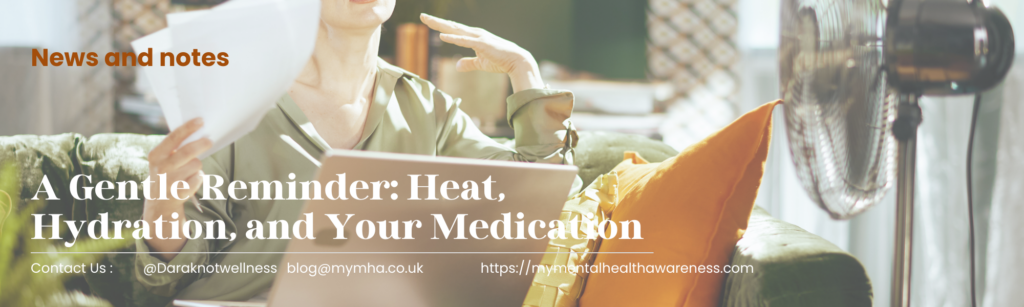
It’s summer. Since May, it’s been warmer than I’m used to (I live in the Cotswolds, though I’m a Scottish gal through and through. This cartoon is accurate for my summers). In part, because I’m just not built for this weather, but I’ve always known my meds make it worse. Anyone that has experienced hot weather with antidepressants, antipsychotics, meds for ADHD, or even sometimes, antihistamines or antisickness meds will potentially knock your internal thermostat for a loop.
So, why does this happen? Some medications can:
While not a complete list, here are some common types of medications that can make you more vulnerable to heat.
This isn’t about being scared; it’s about being prepared. Think of it as another form of self-care.
Staying mindful of your medication and hydration is one of the most powerful self-care anchors you can have this summer. It keeps you safe, grounded, and well enough to enjoy the season on your own terms.

D Kai Wilson-Viola is an author, activist and lifelong learner. She believes in open, honest communication and holistic wellness that looks not only at how fit you are, but how fit your mind and emotions are in with it. A survivor with CPTSD and anxiety, Kai offers help and her shoulder to anyone that needs it.
When not managing blogs or coding, Kai can be found training at LudoSport, writing books of her own, editing for others, formatting and playing computer games. She has two cats and has been in a long term relationship for over 20 years.

All advice and information offered on this site is offered as is, and you should discuss any treatments you undertake with your GP or other healthcare provider. Unless otherwise identified, our experiences are shared in good faith, but are anecdotal and do not constitue medical advice, but instead, a starting point for your own healing journey.
This site uses affiliate links to provide services with tracked recommendations.
(c) 2025- Present - D Kai Wilson-Viola, Jeff Barnes and Dara Knot Wellness
Hosted by Hosting For Writers